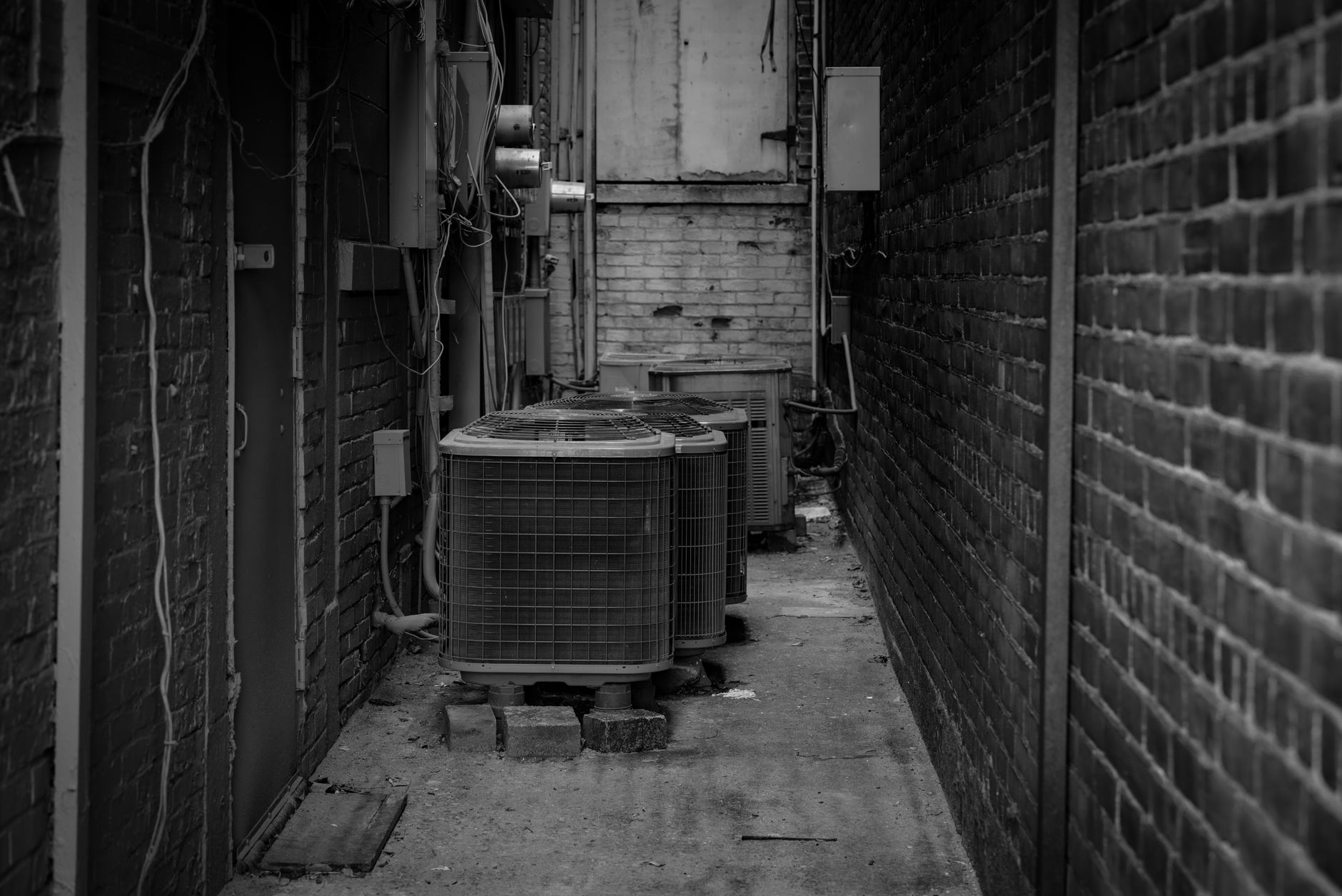
Swamp Cooler to Refrigerated Air Conversion Cost in Albuquerque: Full Price Breakdown
By Number One Plumbing11 min read
This applies to most single-family homes. The estimate is based on local project data. Equipment grade, electrical capacity, and permit fees all affect your final number.
What Does a Swamp Cooler to Refrigerated Air Conversion Actually Include?
A swamp cooler to refrigerated air conversion is not simply swapping one unit for another. A complete installation involves several steps. Remove the existing evaporative cooler and its mounting bracket. Install an outdoor condenser and indoor air handler. Run refrigerant line sets and upgrade the thermostat. Pull a mechanical permit from the city. Many Albuquerque homes also require a new 240V electrical circuit. The old swamp cooler ran on standard 120V power. The project may include patching the opening left by the old cooler. This depends on when your home was built. It also depends on roof penetration condition. This cost is easy to miss when comparing quotes. Understanding every line item in the scope prevents sticker shock and helps you evaluate bids on equal footing.
Equipment Removed vs. Equipment Installed
The removal side of this project is straightforward but not free. Contractors disassemble the old swamp cooler, remove its mounting hardware, and haul the unit away. On the installation side, you receive an outdoor condensing unit, an indoor air handler or gas furnace, refrigerant line sets connecting the two, and a programmable or smart thermostat. Heat pump systems are gaining popularity in Albuquerque because they handle both cooling and heating in a single unit, which works well in the city's mild winters. A heat pump eliminates the need for a separate gas furnace, simplifying the installation and potentially qualifying you for larger federal tax credits. Brands commonly installed by Albuquerque contractors include Lennox, Trane, Carrier, and Rheem, and each offers multiple efficiency tiers at different price points.
Permits and Inspections Required in Albuquerque
The City of Albuquerque requires a mechanical permit for any HVAC installation, and this is not optional. A licensed contractor must pull the permit; homeowners who skip this step face real consequences when selling the property, as unpermitted HVAC work frequently surfaces during buyer inspections and can derail a sale. After installation, a city inspector from the Albuquerque Development Services Department visits the property to verify code compliance. Reputable contractors include permit fees in their quoted price, so ask specifically whether permits are included before signing any contract.
Swamp Cooler to Refrigerated Air Conversion Cost Breakdown by Category
Breaking the project into individual cost categories is clearest. It shows where your money goes. It also explains why two quotes for the same home differ by thousands of dollars. Industry data shows average full system replacement at $9,500 (hvacloadcalculate.com). Labor rates run $45 to $65 per hour (hvacloadcalculate.com). New Mexico runs 8 to 12% (hvacprojectcost.com) below the national average. Lower regional labor costs account for this difference. The table below shows how each cost category contributes to that range.
| Cost Factor | Low-End Estimate | Mid-Range Estimate | High-End Estimate | Notes |
|---|---|---|---|---|
| Equipment (AC or Heat Pump) | $2,000 | $4,000 | $7,500 | Heat pumps cost more but qualify for federal tax credits |
| Labor | $1,500 | $2,500 | $3,500 (chill-services.com) | Complexity, access, and project duration affect labor cost |
| Ductwork Modification or Replacement | $0 | $2,500 | $5,000 | $0 if existing ducts are compatible; full replacement is the most expensive variable |
| Electrical Upgrade (circuit or panel) | $300 | $700 | $3,000 | Panel upgrade needed only if current service is under 150A |
| Permits and Inspections | $150 | $225 | $300 | City of Albuquerque mechanical permit required for all installations |
| Swamp Cooler Removal and Disposal | $200 | $300 | $500 | Roof patching may add $150 to $400 if the penetration is large |
| Total Estimated Project Cost | $5,000 | $8,500 | $14,000+ | Larger homes or full duct replacements may exceed $14,000 |
Equipment Costs: Efficiency Tiers and What They Mean for Your Budget
Equipment is typically the largest single line item in any refrigerated air installation. Entry-level systems rated up to 16.5 SEER2, such as the Carrier Comfort Series (carrier.com), cover basic cooling needs but provide less humidity control during Albuquerque's July and August monsoon season. Mid-tier systems rated up to 18.0 SEER2, like Carrier's Performance Series (carrier.com), offer meaningfully better dehumidification and modulating operation. Premium inverter-driven systems, some reaching up to 21.0 SEER2 (carrier.com), cost more upfront but the federal Department of Energy has calculated that the required ENERGY STAR-qualified central AC saves money if priced no more than $1,853 above a less efficient model (energy.gov), and the best available models can save up to $6,724 over their lifetime (energy.gov). The math usually favors investing in mid-tier or higher equipment if you plan to stay in your Albuquerque home more than five years.
Ductwork: The Variable That Changes Everything
Ductwork condition is the single most unpredictable cost in a swamp cooler conversion. Evaporative coolers push large volumes of humid air at low pressure; refrigerated systems move smaller volumes of dry air at higher pressure. Ducts sized for a swamp cooler are often too large in cross-section and too leaky to handle refrigerated air efficiently. Air duct replacement costs $16 to $19 per linear foot, with an average 200-foot replacement running $3,100 to $3,700 (thisoldhouse.com). Full duct installation can range from $1,500 to well over $20,000 depending on system complexity (trane.com). Homes built before 1985, including many properties in the North Valley and Albuquerque's historic neighborhoods, frequently have undersized or deteriorated ductwork that cannot support refrigerated air without modification. Consider a 1960s home in the North Valley. It has original galvanized ductwork sized for a swamp cooler. When converted to refrigerated air, that ductwork cannot efficiently deliver smaller volumes of high-pressure air. A full $3,500 (chill-services.com) replacement is often required. This catches homeowners off guard during quoting. A reputable contractor performs a Manual J load calculation before quoting any ductwork scope. This calculation determines actual airflow needs room by room, not just an estimate based on total square footage.
Electrical Upgrade Costs
Electrical work is the most commonly underestimated cost category. It deserves more than a passing mention. Most refrigerated AC condensers require a dedicated 240V circuit. The circuit needs 30 to 50 amps. A home that used evaporative cooling does not have this circuit. A larger issue arises when the panel lacks available breaker slots. It can operate on 100-amp service. Upgrading from 100A to 200A service adds significant cost to the project. Older Albuquerque homes, particularly those in the South Valley, Los Ranchos de Albuquerque, and historic downtown neighborhoods, frequently have outdated panels that cannot safely support a modern AC system without an upgrade. At Number One Plumbing, we always assess panel capacity during the initial site visit because discovering a panel limitation mid-installation creates delays and unplanned expenses that no homeowner wants. Ask your contractor explicitly whether the quoted price includes any necessary electrical panel work, or whether that cost will be billed separately if a problem is discovered during installation.
How Does Home Size Affect Total Conversion Cost?
Home square footage determines the tonnage of the AC system required. Tonnage drives equipment cost, ductwork sizing, and installation complexity simultaneously. This relationship is direct and significant. A 1,000 to 1,500 square foot home typically requires a 2 to 2.5 ton system, while a 2,000 to 2,800 square foot home needs 3 to 4 tons. Larger systems cost more to purchase, require longer refrigerant line sets, and often demand more extensive duct modifications to distribute conditioned air evenly throughout the home. Multi-zone systems for large or multi-story Albuquerque homes add further cost per additional zone. The Southwest region averages $9,500 for a full system replacement (hvacloadcalculate.com), but a conversion project with ductwork in a larger home routinely exceeds that baseline.
Typical Cost Ranges by Home Size in Albuquerque
Use the size ranges below as planning benchmarks. Actual costs depend on ductwork condition, equipment tier, and electrical status, but these figures reflect real Albuquerque and Rio Rancho project data (hvacprojectcost.com).
- Under 1,200 sq ft: $5,000 to $7,500 with existing compatible ductwork
- 1,200 to 2,000 sq ft: $7,000 to $10,500 depending on duct condition
- 2,000 to 3,000 sq ft: $9,500 (hvacloadcalculate.com) to $14,000, often requiring ductwork modification and possibly a panel upgrade
- Above 3,000 sq ft or multi-unit properties: Custom quote, typically exceeding $14,000
Scheduling your project during spring or fall off-peak seasons can save 20 to 30% compared to emergency summer pricing (hvacloadcalculate.com).
How Long Does the Conversion Take?
Timeline is a practical concern that most pricing guides ignore entirely. A straightforward swamp cooler to refrigerated air conversion, one where existing ductwork is compatible and no electrical panel work is needed, typically takes 1 to 2 days for an experienced crew. That covers equipment delivery, removal of the old cooler, installation of the new system, refrigerant charging, and system commissioning. Projects requiring ductwork modification or full duct replacement extend the timeline to 3 to 5 days. Panel upgrades require a licensed electrician to coordinate with PNM (Public Service Company of New Mexico) for a meter pull, which can add 1 to 2 business days depending on utility scheduling. Plan for your home to be without cooling for the duration, which is why late spring scheduling, before Albuquerque's June heat peak, is strongly preferred. Our team recommends booking early. Summer demand fills contractor calendars fast, and rush projects often cost more.
Tax Credits, Rebates, and Financing That Reduce Your Out-of-Pocket Cost
The federal Inflation Reduction Act Section 25C tax credit makes high-efficiency refrigerated air installation significantly more affordable than the sticker price suggests. Standard central AC systems (non-heat pump) qualify for up to $600 under the same 25C credit. A properly matched inverter heat pump system can also save $600 to $1,200 per year in combined heating and cooling costs, which compounds the financial benefit over time. New Mexico does not currently offer a statewide HVAC rebate program, but PNM and New Mexico Gas Company (NMGCO) periodically run equipment rebates for high-efficiency systems. Check the PNM website before committing to a specific equipment tier, as rebate availability changes seasonally. Always ask your contractor to provide equipment efficiency documentation, specifically the AHRI certificate, before installation so you have the paperwork needed for your tax filing.
Which Systems Qualify for the Federal 25C Tax Credit?
Not every refrigerated air system qualifies for the maximum credit. Standard split-system central AC units that are not heat pumps qualify for a smaller $600 credit. Dual-fuel systems, which pair an electric heat pump with a gas furnace backup, may qualify under separate heat pump and furnace credit categories. Your contractor should provide the AHRI certificate and manufacturer's efficiency documentation at project completion. Without those documents, your tax preparer cannot certify the credit. This is worth confirming before installation, not after.
How to Choose the Right Contractor for Your Conversion in Albuquerque
The New Mexico Construction Industries Division (NMCID) licenses mechanical contractors, and verifying that license before signing anything is non-negotiable. A licensed contractor pulls permits; an unlicensed one asks you to look the other way, which creates title and resale risk. Beyond licensing, the most important differentiator is whether the contractor performs a Manual J load calculation before quoting. This engineering calculation determines the correct system size for your specific home, accounting for ceiling height, insulation levels, window area, and local climate data. Contractors who quote based on square footage alone frequently oversize equipment, which causes short cycling, poor humidity control, and premature system failure. Local experience also matters in ways that national franchise contractors may not appreciate. Albuquerque's high desert climate, hard water, adobe and stucco construction, and unique duct configurations in flat-roof homes create installation challenges that contractors unfamiliar with the area routinely underestimate.
What Questions Should You Ask Before Signing a Conversion Contract?
Before you sign anything, ask these specific questions and require written answers in your contract. First: does this quote include permit fees, disposal of the old cooler, and a final city inspection? Second: will you perform a Manual J load calculation and can I review the results? Third: who are your installers, specifically are they direct employees or subcontractors? Fourth: what is the labor warranty period, and how do I reach you after installation if there is a problem? Fifth: is ductwork evaluation included in this quote, or will duct costs be assessed after work begins? Any contractor unwilling to answer these questions in writing is a red flag. Honest contractors welcome informed customers.
Frequently Asked Questions
How long does a swamp cooler to refrigerated air conversion take in Albuquerque?
A straightforward conversion with compatible existing ductwork typically takes 1 to 2 days. Projects requiring ductwork modification or full duct replacement extend to 3 to 5 days. Electrical panel upgrades add 1 to 2 additional days due to PNM utility coordination. Scheduling in spring avoids summer backlog and potential rush premiums.
Is it worth converting from a swamp cooler to central AC in New Mexico?
Yes, for most Albuquerque homeowners. Refrigerated air handles the humidity spikes of monsoon season that swamp coolers cannot manage. A properly matched inverter heat pump can save $600 to $1,200 annually in combined heating and cooling costs. Federal tax credits of up to $2,000 further reduce payback time on qualifying heat pump systems.
Can I keep my existing ductwork when switching from evaporative to refrigerated air?
Sometimes. Ductwork compatible with refrigerated air must be properly sized, sealed, and capable of handling higher static pressure than evaporative systems require. A Manual J load calculation determines whether existing ducts are adequate. Homes built after 1990 with well-maintained ductwork have the best chance of reusing existing infrastructure without costly modifications.
What is the difference between a heat pump and a standard central AC for this conversion?
A heat pump provides both cooling and heating from a single outdoor unit, eliminating the need for a separate gas furnace. Standard central AC only cools, requiring a furnace for winter heat. Heat pumps cost more upfront but qualify for up to $2,000 in federal 25C tax credits and offer year-round energy savings in Albuquerque's mild winters.
Do I need a city permit to convert a swamp cooler to refrigerated air in Albuquerque?
Yes. The City of Albuquerque requires a mechanical permit for all HVAC installations, typically costing $150 to $300. A licensed contractor must pull the permit. Skipping the permit creates risk when selling your property, as unpermitted HVAC work frequently surfaces during buyer inspections and can delay or derail a real estate transaction.
How much does it cost to run refrigerated air vs. a swamp cooler in Albuquerque?
Evaporative coolers cost less to operate during dry months because they use only water and a small motor. Refrigerated air costs more per month in electricity but performs reliably during Albuquerque's monsoon season when humidity spikes make swamp coolers ineffective. High-efficiency systems narrow the operating cost gap significantly compared to entry-level equipment.
Will converting to refrigerated air increase my home's resale value?
Yes, in the Albuquerque market. Buyers increasingly expect refrigerated air, and homes with evaporative cooling only often sell at a discount or require conversion credits in negotiations. A permitted, professionally installed refrigerated air system is a documented upgrade that appraisers recognize and buyers value, particularly given the city's intensifying summer heat.
What is the average swamp cooler to AC conversion cost in Albuquerque?
Swamp cooler to refrigerated air conversions in Albuquerque and Rio Rancho average $8,000 to $14,000 depending on home size, ductwork condition, and equipment tier. Homes with existing compatible ductwork land closer to $8,000, while larger properties requiring full duct replacement or electrical panel upgrades reach $14,000 or more.
How much extra does ductwork add to the conversion price?
Ductwork adds $0 if existing ducts are fully compatible, or $3,100 to $3,700 for an average 200-foot replacement at $16 to $19 per linear foot. Full duct system installation can range from $1,500 to well over $20,000 for complex projects. Ductwork is the most unpredictable variable in any swamp cooler conversion budget.
Do Albuquerque HVAC companies offer free conversion estimates?
Most licensed Albuquerque HVAC contractors offer free on-site estimates. Be cautious of phone-only quotes because accurate ductwork evaluation requires a physical inspection. A thorough estimate should include a Manual J load calculation, ductwork assessment, electrical capacity check, and itemized cost breakdown covering equipment, labor, permits, and disposal.
What permits are needed for refrigerated air conversion in Albuquerque?
A mechanical permit from the City of Albuquerque Development Services Department is required for all HVAC installations. Permit fees typically range from $150 to $300. If electrical panel work is involved, a separate electrical permit may also be required. Your licensed contractor should pull all required permits and schedule the final inspection on your behalf.
Is it cheaper to repair a swamp cooler or convert to AC?
Short-term, repairing a swamp cooler costs far less, often $150 to $600 for common repairs. Long-term, conversion delivers greater comfort and resale value. If your swamp cooler is more than 10 years old, needs recurring repairs, or struggles during Albuquerque's monsoon season, conversion often provides better return on investment within 5 to 7 years.
Sources & References
About the Author
Number One Plumbing
Number One Plumbing is Albuquerque's trusted multi-trade home services provider offering plumbing, HVAC, electrical, and solar solutions with 24/7 emergency availability and over 20 years of local expertise.
Related Posts
Slab Leak Detection and Repair in Albuquerque: Costs, Signs, and What to Expect
A slab leak under your Albuquerque home can silently waste thousands of gallons and cause serious structural damage. This guide covers the warning signs, typical detection and repair costs, and exactly what to expect when you hire a local plumber to fix it.
12 min read
Water Heater Replacement Cost in Albuquerque: Tank vs. Tankless Compared
Replacing a water heater in Albuquerque typically costs $900-$1,800 for a traditional tank unit or $2,200-$4,500 for a tankless system, installed. This guide breaks down what drives those numbers, compares both options side by side, and helps Albuquerque homeowners decide which system makes the most financial sense for their home.
12 min read